

Code, Community, and Environment
Key Tech and AI Takeaways from the NFHA 2026 National Conference

The National Fair Housing Alliance (NFHA) annual conference brought together a powerful coalition of advocates, legal experts, and community leaders to confront a rapidly changing housing landscape. Amidst a challenging federal environment marked by a pullback in traditional civil rights enforcement, the conference focused on developing bold, localized solutions to protect vulnerable households. Discussions throughout the event made it clear that achieving housing justice today requires looking far beyond physical real estate offices and traditional landlord-tenant disputes. Instead, the fight has moved to the cutting edge of technology, where digital tools and infrastructure are reshaping neighborhoods and community health alike.
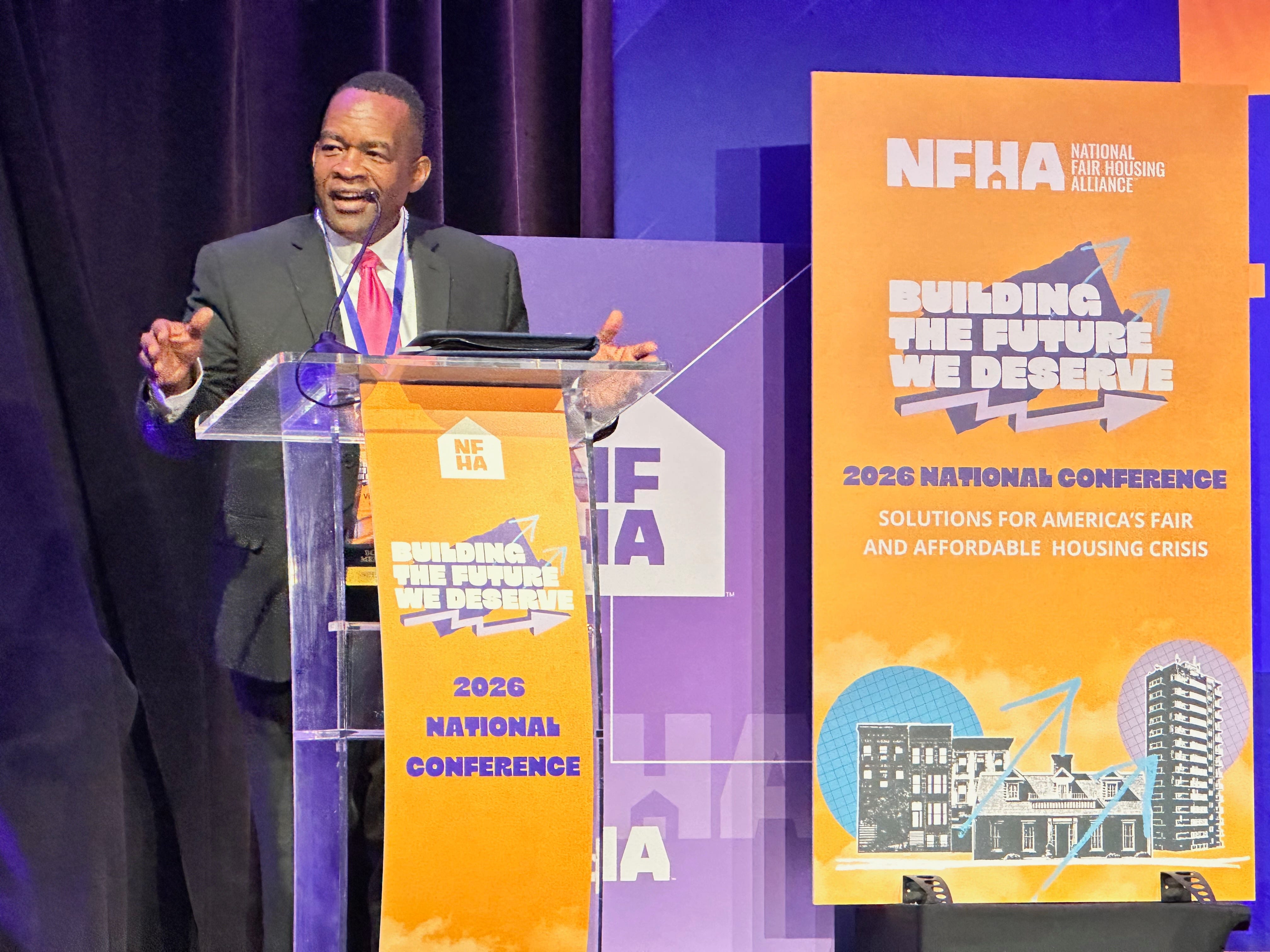
A primary focus of the conference was the massive, unchecked footprint of artificial intelligence and big data on the housing sector. In an interactive workshop, facilitators demonstrated how commercial AI systems—increasingly used by over 82% of Americans for housing insights—reproduce historical patterns of discrimination. For instance, testing of real-time AI search models revealed blatant racial steering: when a white home seeker profile queried an AI model about New Orleans, the system steered the user exclusively to affluent, predominantly white neighborhoods while completely omitting diverse, historically Black neighborhoods of equal character. Furthermore, the AI models disproportionately associated terms like “diversity” and “progressiveness” only with Black search profiles, while leaving white search results completely devoid of these descriptors. This is consistent with findings documented in a recent study completed by NFHA’s Responsible AI Lab. A preprint of the study is here.

In a separate panel discussion, we learned that the digitization of housing search tools is closely mirrored by the rise of under-regulated tenant screening algorithms. Panelists warned of an “algorithmic monoculture” where landlords increasingly outsource housing decisions to a handful of predictive tech models. These black-box systems generate speculative risk scores using biased, historical eviction and credit data to predict future renter behavior, effectively locking out thousands of qualified applicants. To counter this, housing advocates are pushing for fairer screening alternatives, such as positive-only rent reporting and cash-flow underwriting under the protection of Section 1033 of the Dodd-Frank Act, while continuing to utilize the Fair Housing Act’s disparate impact theory to challenge discriminatory automated models.

The conference also drew critical connections between the virtual world of AI and its physical consequences, dedicating significant focus to the environmental and housing toll of hyperscale AI data centers. These massive data facilities are being built at an unprecedented velocity, frequently adjacent to low-wealth communities of color. A prominent case study from Memphis illustrated the severe cost of this infrastructure: dozens of methane gas turbines without Clean Air Act reviews were allegedly deployed, leading to spikes in pediatric respiratory emergency room visits in a historic Black neighborhood and causing families to leave the area entirely.
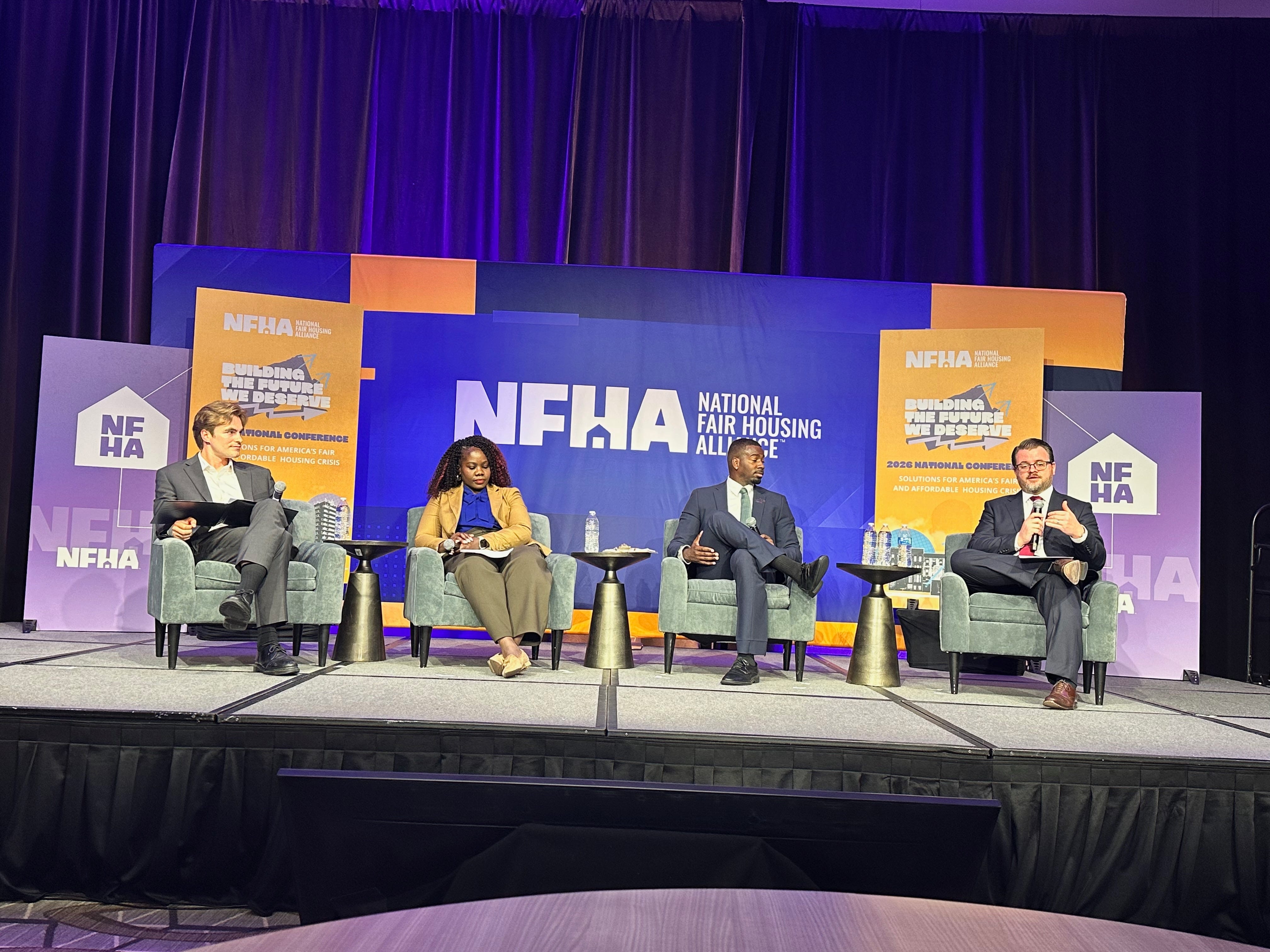
To reclaim local control, community leaders are using municipal zoning enforcement to address noise and air pollution, while pointing to resources like the NAACP’s national data center principles and templates for legally binding Community Benefit Agreements (CBAs) to prevent big tech from exploiting local resources at the expense of ratepayers. The conference emphasized that as technology continues to scale, local organizing and strict data accountability must serve as our primary line of defense.
Ultimately, the major takeaway from this year’s conference is that the virtual and physical footprints of technology can no longer be evaluated in isolation. Whether we are fighting the invisible steering of an online search algorithm or the very real pollution of a local data center, our defense remains rooted in community-led action. As the federal regulatory landscape shifts, the responsibility to establish guardrails falls to local advocates, municipal planners, and state coalitions. By uniting to demand transparency from developers, enforcing local zoning protections, and centering human dignity over speculative tech growth, we can ensure that the technological advancements of tomorrow do not come at the expense of our neighborhoods today.